



Whether you’re in healthcare, food service, lab work, or simply looking for reliable disposable gloves, the choice of material matters more than you might think. Picking the right glove isn’t just about comfort—it’s about protection, durability, and suitability for the task. The three most common options—nitrile, latex, and vinyl—each have their own strengths and weaknesses. Let’s break down the differences to help you make an informed decision.
Nitrile Gloves: The Modern All-Rounder
Made from a synthetic rubber (acrylonitrile-butadiene copolymer), nitrile gloves emerged as a premier alternative to latex.
Key Features:
- Material: Synthetic, latex-free.
- Fit & Feel: Good dexterity and tactile sensitivity, though traditionally slightly less elastic than latex. Modern formulations are much improved.
- Strength: Excellent puncture and chemical resistance, especially to oils, solvents, and certain acids.
- Allergy Risk: Virtually none. The ideal choice for those with latex allergies.
- Common Uses: Medical exams, laboratory work, automotive, janitorial, tattoo artists, and high-risk environments.
Latex Gloves: The Classic Performer
Derived from natural rubber latex, these are the original standard for a reason.
Key Features:
- Material: Natural rubber.
- Fit & Feel: Superior elasticity, comfort, and fit. Offers excellent tactile sensitivity and grip.
- Strength: Very good puncture and tear resistance under tension.
- Allergy Risk: Can cause Type I allergic reactions in individuals sensitive to natural rubber latex proteins.
- Common Uses: Medical procedures (where high tactility is key), dentistry, and many applications where user comfort is paramount in the absence of allergies.
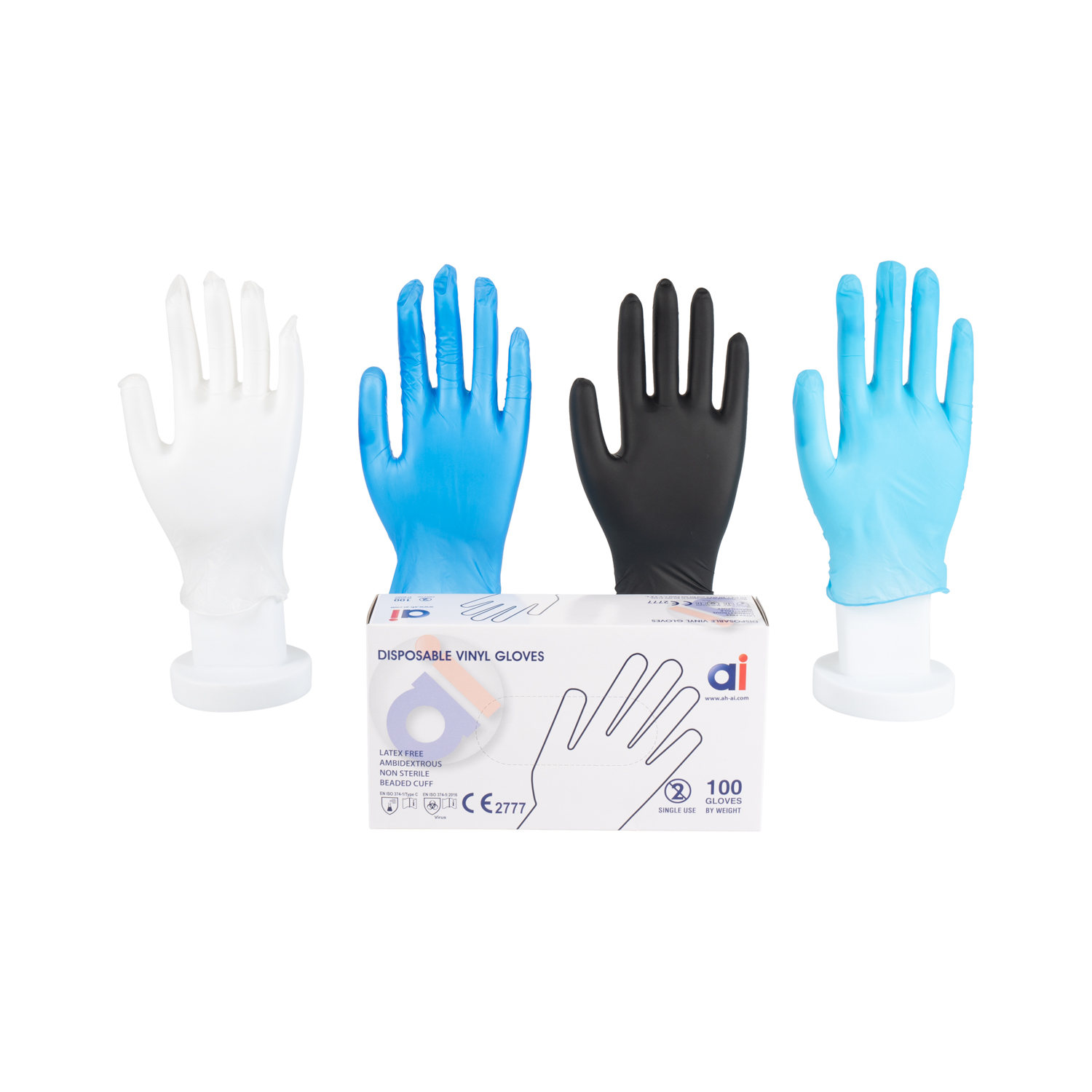
Vinyl Gloves: The Economical Choice
Made from polyvinyl chloride (PVC), vinyl gloves are a cost-effective, basic barrier option.
Key Features:
- Material: Synthetic plastic (PVC).
- Fit & Feel: Looser fit, less elastic, and can feel more plastic-like. Tactile sensitivity is lower.
- Strength: Provides basic protection against fluids but offers the lowest puncture and chemical resistance. Can weaken or break down with exposure to oils and many chemicals.
- Allergy Risk: Latex-free and generally low allergy risk.
- Common Uses: Low-risk, short-duration tasks like food preparation and handling, light cleaning, salon services (hair coloring), and general non-hazardous material handling.
| Feature | Nitrile | Latex | Vinyl |
| Material | Synthetic Rubber | Natural Rubber | Plastic (PVC) |
| Elasticity & Fit | Very Good | Excellent | Fair (Looser) |
| Durability & Puncture Resistance | Excellent | Very Good | Poor |
| Chemical Resistance | Excellent | Good (varies) | Poor |
| Allergy Risk | Very Low | Possible (Latex Allergy) | Very Low |
| Cost | Mid to High | Mid | Low |
| Best For | High-risk, chemicals, labs, universal use | High tactility, medical procedures (no allergy) | Short-term, low-risk, cost-sensitive tasks |
How to Choose: Nitrile vs. Latex vs. Vinyl??
Your choice should be guided by the specific application:
1.Choose Nitrile Gloves if:
You need superior puncture and chemical protection.
You or the user has a latex allergy.
You’re handling unknown chemicals or complex hazards.
You need a durable, reliable glove for medium-to-long duration tasks.
2.Choose Latex Gloves if:
Superior fit, comfort, and tactile sensitivity are your top priorities.
You are performing tasks requiring extreme precision (e.g., surgery, detailed lab work).
Latex allergies are not a concern for the user or anyone in the immediate environment.
3.Choose Vinyl Gloves if:
You are performing short-duration, low-risk tasks.
Cost is the primary driver, and you need a basic barrier for hygiene.
You are in an environment where gloves are changed very frequently (e.g., food service counter).
发表回复